
Flying with an Electric Wheelchair: Airline Checklist
Flying with an electric wheelchair requires an early conversation with every airline in the itinerary. Battery type and handling details matter; acceptance is never automatic.
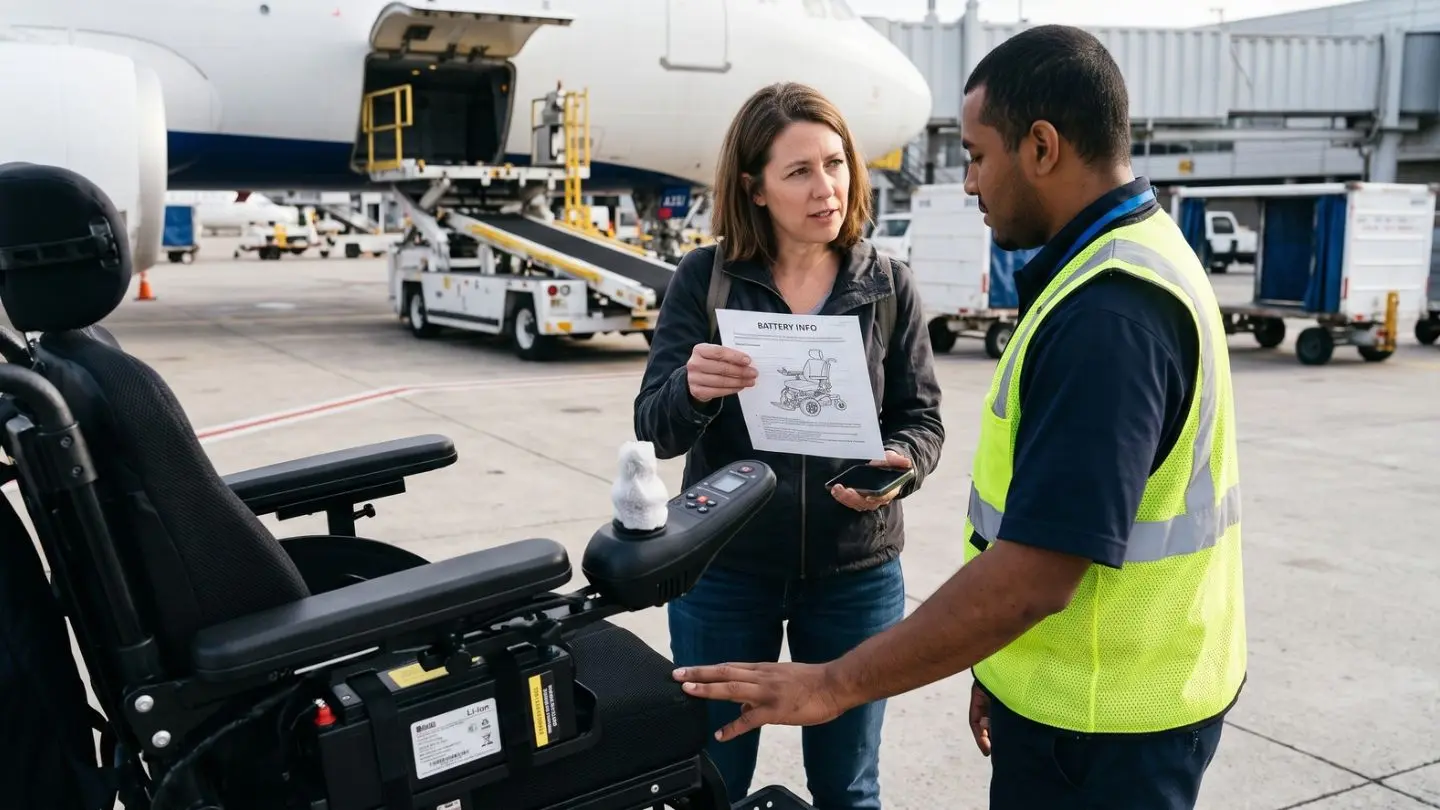
Begin with the airline, not a generic battery rule
Flying with an electric wheelchair requires the operating airline to review the actual chair, battery and aircraft arrangements. Do not assume that a folding label or a lithium battery makes a chair automatically acceptable. Contact every operating airline on the itinerary before travel, including connections and the return. Ask for its current mobility-aid process and written confirmation of what information it needs.
The IATA passenger dangerous-goods guidance links to its current document for battery-powered wheelchairs and mobility aids. It explains categories and information airlines use, but the airline makes the carriage decision. Rules and aircraft loading constraints can change. Confirm the answer for your flight rather than relying on a general article or a previous trip.
Prepare a model and battery information sheet
Record the chair manufacturer and model, overall height, width, length and weight in the configuration used for loading. Include removable parts and the dimensions after any permitted fold. State the battery chemistry, the number of batteries, how they are secured, whether they can be removed and the watt-hour information shown on the label or manufacturer document for lithium models. Do not guess a value from a photograph.
Ask the manufacturer or supplier for the current handling instructions, including how to isolate the power and protect the joystick. Send the exact document to the airline and keep a copy offline. Different battery designs require different handling. A response about another model or a spare battery is not confirmation for the installed battery in your own chair.
Ask about the aircraft and every segment
Tell the airline whether the user can transfer from the chair and what assistance is needed from check-in to the seat and after arrival. Ask where the chair will be handed over, when it will be returned and whether the specific aircraft can accommodate it in the approved loading configuration. Include any connecting flight operated by a different carrier. An itinerary ticket does not prove that each hold can accept the chair.
Ask how a change of aircraft or delayed connection affects the plan, and whom to contact if instructions differ at the airport. Keep the airline’s confirmation and the manufacturer’s sheet together. If a staff member asks you to remove a battery or fold a part differently, follow the approved model instructions and request a supervisor when the request conflicts with them.
Document a safe handover
Before travel, photograph the chair and the condition of its controls, wheels and accessories. Label detachable cushions and components as your airline requests. Explain clearly which pieces must remain attached and which can be removed safely. Do not tape a control or disconnect wiring unless the manufacturer’s instructions and airline process call for that action. Retain your own checklist for the return flight.
At handover, ask staff to repeat the loading instructions and note where the chair will be returned. On arrival, inspect the chair before leaving the handover area. Check controls, brakes, wheels and battery connections on safe level ground. Report damage or missing parts through the airline’s process immediately, and keep photographs and reference numbers.
Plan assistance inside the terminal separately
Airline or airport assistance inside the terminal is separate from equipment for the city. Describe whether you need an aisle chair, transfer help, an escort or help at a connection directly to the airline. Tell staff if you cannot leave your own chair until a particular point. Confirm the assistance for the return journey too; do not assume the first flight’s arrangement automatically covers every segment.
If you plan to rent a chair in Istanbul rather than fly with your own, arrange its delivery to your hotel, home or hospital. We do not deliver or collect equipment at airports. Request terminal assistance from the airline and arrange the onward vehicle separately. Our Istanbul airport arrival guide explains how those separate arrangements fit together.
Protect the travel day from an uncertain answer
Ask the airline to confirm any approval and conditions in writing before setting off. If the answer is incomplete, follow up with the battery sheet and the exact chair dimensions. Do not remove a necessary battery or abandon a seating component simply to satisfy an informal suggestion. The safe option is a clear decision from the operating airline based on the chair’s documentation.
Keep essential medication, personal supports and contact details in a place you can reach, following airline baggage rules. Consider what you would do if the chair were delayed or damaged and whom you would call. The electric wheelchair basics guide helps explain the controls to document, while the airline and IATA remain the sources for flight acceptance.
Keep the return flight in the same checklist
Airline approval on the outbound journey should not be treated as a permanent approval for every later flight. Check the operating carrier, aircraft and connection again for the return. Keep copies of messages, the chair’s information sheet and any handling record in a format accessible without a data connection. If a component was removed during the first flight, verify that it was replaced and working before relying on it for the next journey.
Discuss a realistic backup with companions before travelling. A local rental may help during a stay, but it does not replace airline responsibility for a chair carried on the aircraft. Explain to the airline which seating or mobility needs cannot be met by an ordinary airport chair. When an answer is uncertain, ask the airline to identify the exact missing specification rather than accepting a vague verbal assurance.