Sultanahmet Wheelchair Access: Hagia Sophia, Blue Mosque and Topkapı
A practical guide to Sultanahmet wheelchair access: what to expect at Hagia Sophia, the Blue Mosque and Topkapı Palace, and a level route through the old city.
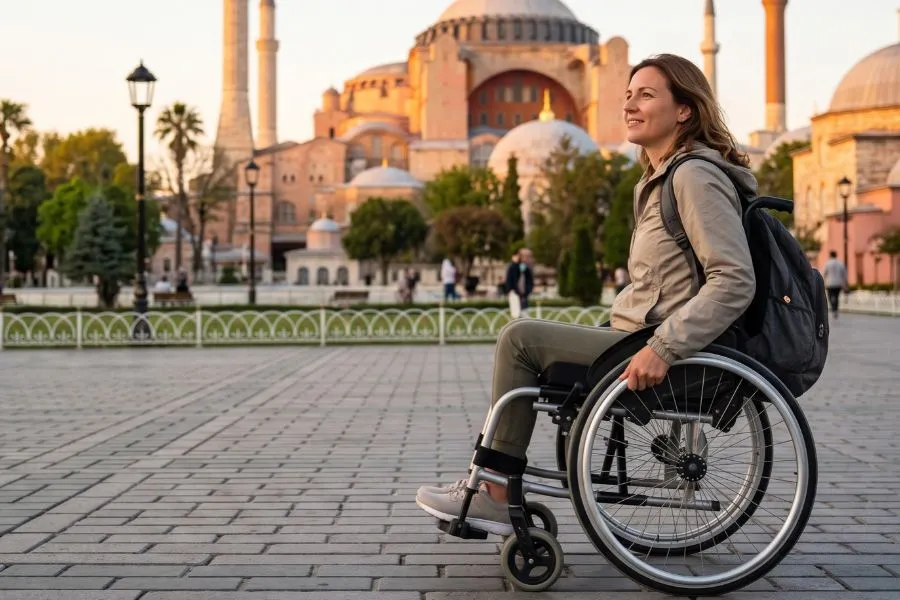
Sultanahmet is the heart of historic Istanbul and the first stop for almost every visitor. Good news first: Sultanahmet wheelchair access is better than its age suggests. The main square and the Hippodrome are level and paved, the T1 tram stops right in the middle, and the great monuments are all within a few hundred metres of each other. The challenges are the cobbled side streets, thresholds and steps at historic entrances, and the crowds. This guide walks you through the main sights and a comfortable route.
Getting to Sultanahmet
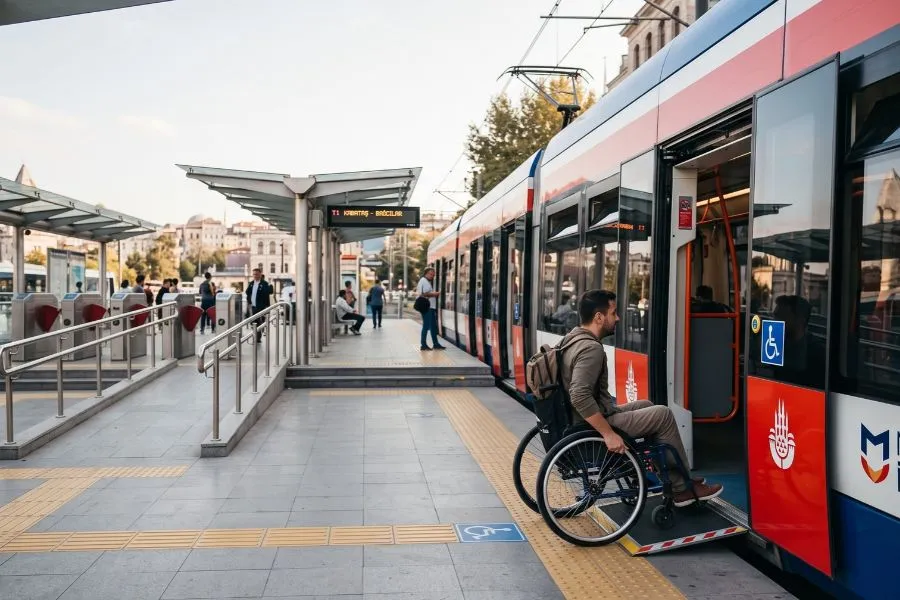
The easiest way to arrive is the T1 tram, which stops at Sultanahmet station next to the square, with low-floor trams and raised platforms. From Karaköy or Galataport the ride takes about 15 minutes; from Kabataş about 20. Taxis can drop you on the streets around the square, but traffic is restricted in places, so agree with the driver on a drop-off point close to the tram stop or the Hippodrome. If you are looking for a hotel, read our page on wheelchair rental in Sultanahmet.
Sultanahmet Square and the Hippodrome
The square between Hagia Sophia and the Blue Mosque and the long Hippodrome beside it are the most comfortable part of the area: wide, level, paved and full of benches. Along the Hippodrome you pass the Egyptian Obelisk, the Serpent Column and the German Fountain. It is the best place to start, to rest between visits and to enjoy the view of both domes.
Hagia Sophia
Hagia Sophia is once again a working mosque. Since 2024, foreign visitors follow a separate, ticketed route that focuses on the upper gallery, while the main prayer hall is reserved for worship. The historic route up to the gallery is a long, uneven stone ramp, which is demanding with a wheelchair. Arrangements for visitors with reduced mobility can change, so ask the staff at the visitor entrance about the current options before you buy a ticket. Even if the interior is difficult, the exterior and the view from the square are unforgettable.
The Blue Mosque (Sultan Ahmed Mosque)
The Blue Mosque is an active mosque that welcomes visitors outside prayer times; entry is free. Visitors enter through the large courtyard, which is paved and mostly level. Inside, the prayer hall is carpeted and flat. Wheelchair users are generally welcome; the attendants at the visitor entrance can advise on the best way in and may ask you to keep to the visitor area. Avoid the midday prayer on Fridays, and dress modestly: women cover their hair, and shoulders and knees should be covered.
Topkapı Palace
Topkapı Palace, the home of the Ottoman sultans, is a short walk from Hagia Sophia along a gently rising street. The palace is built around large courtyards with trees, gravel and cobbled paths. The courtyards themselves can be crossed with a wheelchair, ideally with a companion, and many of the main pavilions are at ground level. Some sections, including parts of the Harem and some treasury rooms, involve steps or narrow passages. Plan at least two hours, start at opening time and take breaks in the shaded gardens. Opening times and tickets are listed on muze.gov.tr.
Gülhane Park
Right next to Topkapı Palace, Gülhane Park is one of the best surprises for Sultanahmet wheelchair access. Its wide, paved avenues slope gently down towards the water, with tall trees, tulips in spring and cafés. It is a lovely way to leave the palace area and continue down to the tram stop at Gülhane or towards Eminönü.
Other sights nearby
Basilica Cistern: the underground cistern involves stairs; check current access before visiting.
Istanbul Archaeology Museums: between Gülhane Park and Topkapı; check which buildings are open and how to reach the upper floors.
Arasta Bazaar: a small, level row of shops behind the Blue Mosque, much calmer than the Grand Bazaar.
The Grand Bazaar: two tram stops away at Beyazıt; the covered streets are fairly level but extremely crowded.
A comfortable half-day route
Arrive at Sultanahmet by tram at around 9:00.
Visit the Blue Mosque before the crowds build up.
Cross the square and the Hippodrome, and admire Hagia Sophia from outside or join the visitor route if it suits you.
Follow the gentle slope to Topkapı Palace for its courtyards and main pavilions.
Leave through Gülhane Park and take the tram from Gülhane back to your hotel.
Practical tips for Sultanahmet wheelchair access
Start early: from late morning, queues and tour groups make moving around much harder.
Use the level square and the Hippodrome to move between sights rather than the cobbled side streets.
Bring a small bag for the push handles with water, a scarf for mosque visits and medication.
Accessible toilets are limited in the area; plan a stop at your hotel or a modern café.
In summer, rest in the shade of Gülhane Park in the early afternoon.
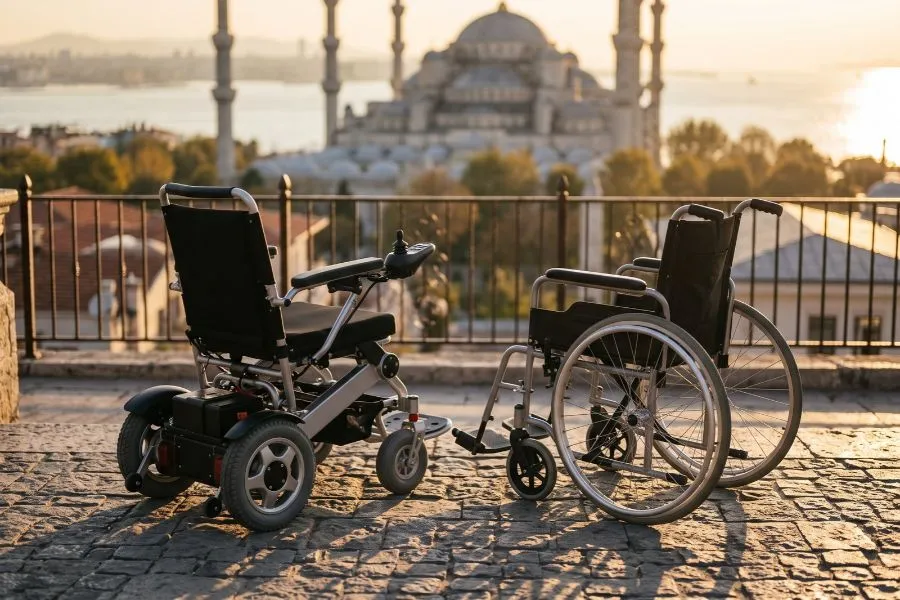
Many of our customers find that a lightweight folding wheelchair is ideal for Sultanahmet: easy on the tram and narrow enough for crowded entrances. If the user wants to explore without being pushed, a folding electric wheelchair handles the gentle slopes towards Topkapı with ease.
Frequently asked questions
Is Sultanahmet wheelchair accessible?
The main square, the Hippodrome and Gülhane Park are level and paved, and the T1 tram stops in the middle. Historic entrances, cobbled side streets and some interiors are harder, so plan your route along the main paved areas.
Can I visit the Blue Mosque in a wheelchair?
Generally yes. The courtyard is paved and the prayer hall is flat and carpeted. Visit outside prayer times and ask the attendants at the visitor entrance for the best way in.
Is Topkapı Palace accessible for wheelchair users?
The courtyards and many main pavilions can be visited with help, but paths are cobbled or gravelled and some sections, including parts of the Harem, have steps.