Is Istanbul Wheelchair Accessible? An Honest 2026 Guide
Is Istanbul wheelchair accessible? Yes — with planning. Our local team explains where it is easy, where it is hard and how to plan a comfortable trip.
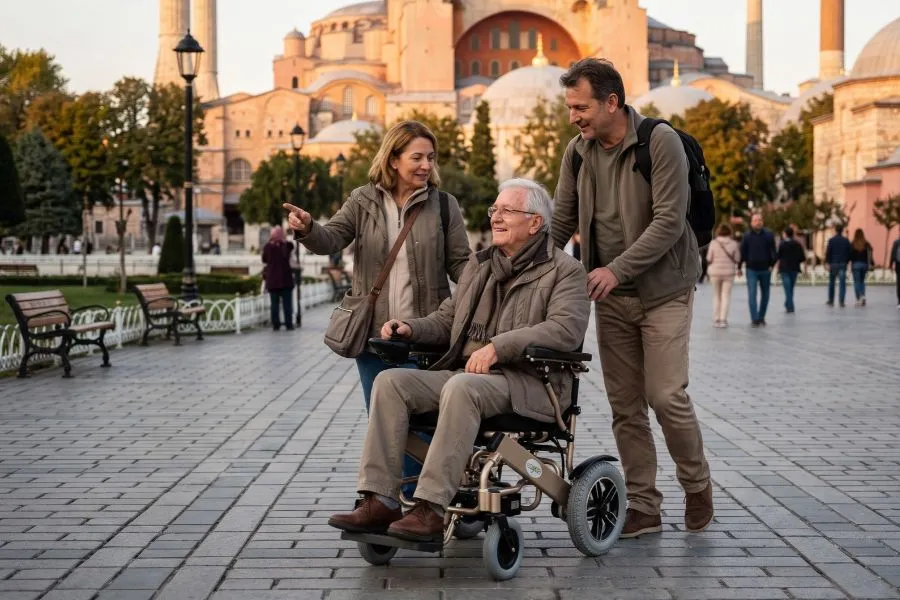
Is Istanbul wheelchair accessible? The honest answer is: more than most visitors expect, and less than many European capitals. Istanbul is built on hills, its oldest streets are cobbled and the crowds can be intense. At the same time, the city has invested heavily in step-free public transport, the main waterfronts are long and level, and the most famous sights are visited by wheelchair users every day. With a little planning, a wheelchair trip to Istanbul is not only possible but deeply rewarding.
We deliver wheelchairs to hotels across the city every day, so we hear what works and what does not. This guide sums up what our customers tell us, area by area, so you can decide where to stay and how to plan each day.
Is Istanbul wheelchair accessible? The short answer
Easy: the T1 tram, the metro and Marmaray rail lines, modern shopping centres, new museums, waterfront promenades such as Galataport, the Bosphorus shore and the Kadıköy seafront.
Manageable with help: the historic peninsula around Sultanahmet, the big mosques, city ferries, the Grand Bazaar and Spice Bazaar.
Difficult: the steep streets of Galata, Cihangir and Balat, stairs in older buildings, and some historic sites with uneven stone floors.
Hills and cobblestones
The biggest challenge is the terrain. The historic peninsula, Beyoğlu and the Bosphorus villages all rise steeply from the water. Pavements can be narrow, kerbs high and paving uneven. The practical solution is to stay on the level routes along the water and use transport or taxis for the climbs. For example, the F1 funicular links Kabataş with Taksim Square, and the M2 metro stops at Şişhane, at the top of the Galata hill, so you can avoid the steepest climbs; the historic Tünel funicular from Karaköy is another option, but ask the staff about step-free access at its stations.
For a manual wheelchair, a companion who can push on slopes makes a big difference. If nobody can push uphill, an electric wheelchair takes the effort away, and folding lithium models fit into a taxi boot.
Public transport
Istanbul’s rail network is the most accessible part of the city. Metro and Marmaray stations have lifts, and trains have level boarding. The T1 tram, which runs from Kabataş through Karaköy, Eminönü and Sultanahmet to Zeytinburnu and Bağcılar, uses low-floor vehicles. City ferries operated by Şehir Hatları generally have boarding ramps, and the crew is used to helping. The metrobus is step-free at most stations but extremely crowded at peak times. You can check station facilities on the Metro Istanbul website. We explain every option in our guide to getting around Istanbul by public transport in a wheelchair.
The sights
Most of Istanbul’s headline attractions can be visited in a wheelchair, at least in part. Squares such as Sultanahmet and the Hippodrome are level. The great mosques have large, flat interiors once you are inside, though entrances may involve a threshold or a ramp. Palaces and older museums often have accessible ground floors but stairs to upper levels. Newer venues such as Istanbul Modern at Galataport were designed with lifts and step-free routes. Access arrangements change with restoration work and visitor routes, so check the official site before you go — the Turkish Ministry of Culture lists state museums on muze.gov.tr.
See our list of 10 wheelchair accessible attractions in Istanbul and our detailed guide to visiting Sultanahmet in a wheelchair.
Hotels
International chain hotels and newer hotels usually have lifts, step-free entrances and at least one accessible room. Boutique hotels in old buildings in Sultanahmet, Galata and Balat are charming but often have steps at the entrance, small lifts or none at all. Before booking, ask the hotel directly: is the entrance step-free, how wide is the lift door, and does the bathroom have a walk-in shower? A shower chair can make a standard bathroom much safer.
Where to stay for easy access
Sultanahmet: close to the main sights and the T1 tram; choose a hotel on a level street.
Karaköy and Galataport: level waterfront, the tram and ferries on your doorstep.
Beşiktaş and the Bosphorus shore: flat promenades and modern hotels.
Şişli and Nişantaşı: large modern hotels, wide pavements and the metro.
Practical tips from our team
Plan one main sight per half day; distances and crowds are tiring.
Visit major mosques and museums early on weekday mornings.
Carry the hotel address in Turkish for taxi drivers.
Keep a small bag on the push handles for water, medication and documents.
From November to March, bring rain covers: wet marble and stone are slippery.
Bringing your own wheelchair or renting locally?
Many travellers prefer not to check their own wheelchair on a long flight, or only need one for the longer distances in Istanbul. Renting locally means the chair is waiting for you at your hotel, adjusted to the user, and is collected when you leave. Our Istanbul wheelchair rental service delivers manual and electric wheelchairs, scooters and walkers across the city, with no deposit. Not sure which chair suits your plans? Read electric or manual wheelchair for Istanbul.
When is Istanbul wheelchair accessible at its best? Seasons and weather
Spring (April to early June) and autumn (September to November) are the most comfortable seasons: mild temperatures, fewer cruise crowds than in midsummer and dry pavements. Summer brings heat and the busiest crowds around Sultanahmet, so plan sightseeing for the morning and the evening and rest in the afternoon. Winter is quieter and cheaper, but rain makes marble steps, ramps and cobblestones slippery, and a rain cover for the wheelchair is worth packing. Whatever the season, visiting the most popular places on weekday mornings makes a big difference.
Accessible toilets and rest stops
Accessible toilets are easiest to find in shopping centres, modern museums, large hotels, airports and the bigger metro and Marmaray stations. In the historic areas they are less common, so many visitors plan a stop at a hotel or a modern café between sights. Mosque courtyards, parks and the waterfront promenades have benches for rest breaks. If the user tires easily, a rollator with a seat or a wheelchair for the longer distances lets you see more without exhaustion.
So, is Istanbul wheelchair accessible enough for a first trip? For most of our customers the answer is yes: they combine the level waterfronts, the tram and the ferries with a few taxi rides, and they come back for a second visit.
Frequently asked questions
Is Istanbul wheelchair accessible for first-time visitors?
Yes, if you plan around the hills. Stick to level waterfronts and squares, use the tram, metro and ferries, and take taxis for steep areas. Most major sights can be visited at least in part.
Are Istanbul’s mosques wheelchair accessible?
The interiors of the great mosques are large and flat. Entrances may have a threshold or a ramp, and visitor routes change during restoration work. Visiting outside prayer times and asking the attendants usually helps.
Can I rent a wheelchair in Istanbul?
Yes. Local rental companies, including ours, deliver wheelchairs to your hotel and collect them when you leave. Book a day or more in advance in busy seasons.